Insights & the Art Market
What Can the Back of an Artwork Reveal?
Auction labels, numbers, inscriptions and old notes can reveal important information about an artwork’s provenance, identity and history.
STOA · 20 September 2026
Angelos Stavropoulos · Owner · STOA
When we examine an artwork, we never limit ourselves to what is immediately visible.
We examine the work as a whole, including the back, the base, the frame and any other area that may preserve information about its identity and history.
Old gallery or auction house labels, numbers, stamps, handwritten notes, signatures and dates may be found on the back, the base or elsewhere on the work. Details that may appear insignificant at first can provide the starting point for researching an artwork’s history.
In some cases, these details are important enough that losing them can create a real problem when trying to identify the work.
A Christie’s Label and the History of a Takis
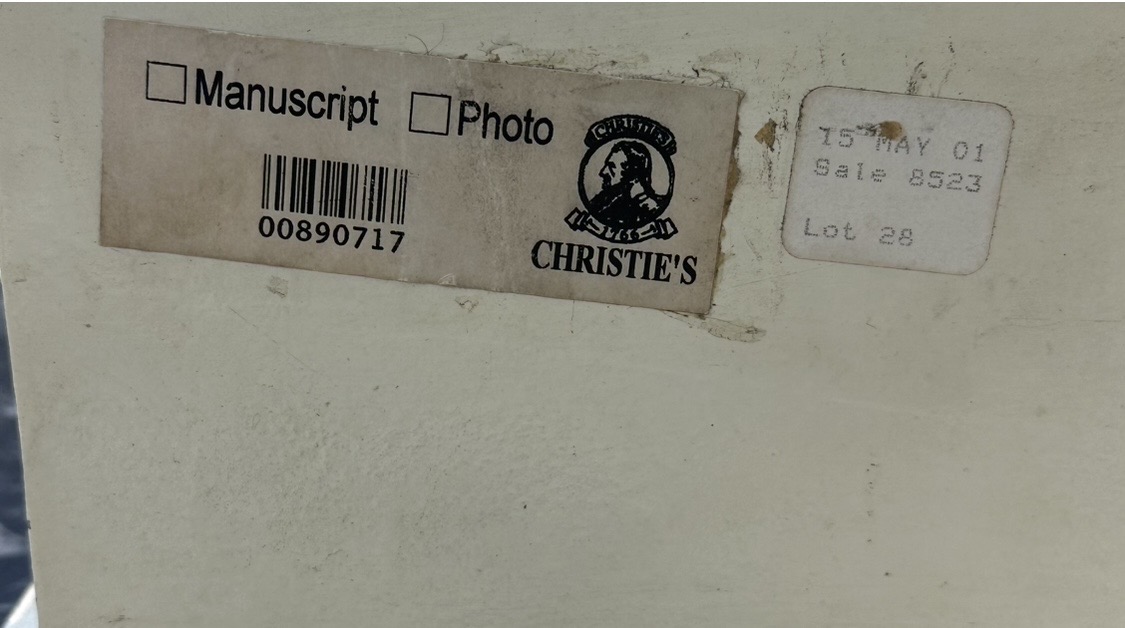
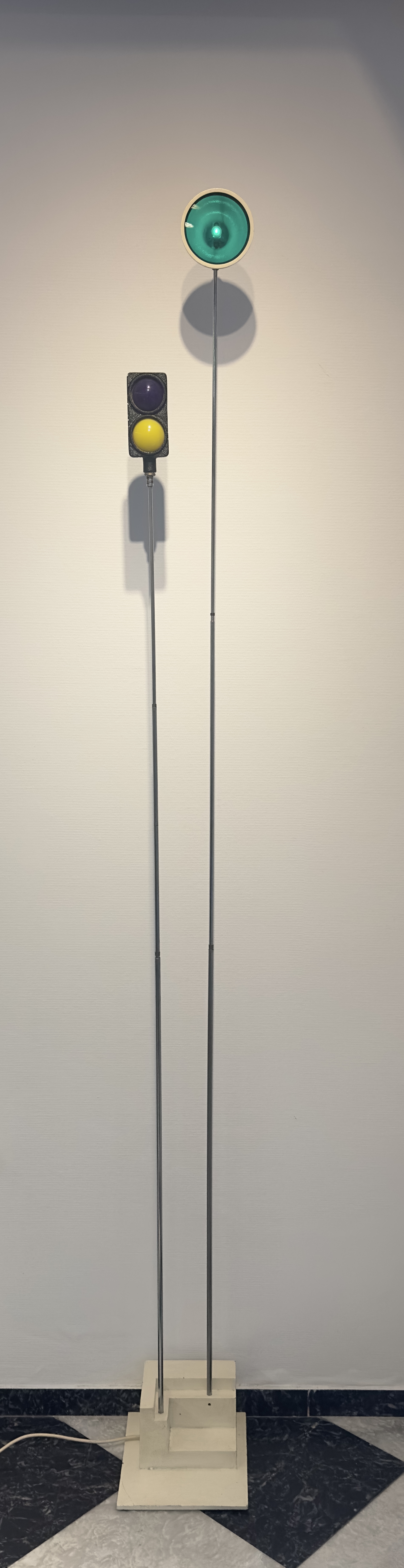
This label is preserved on the back of Takis’ “Signal”, a light-based construction designed in 1968 from Series III.
The Christie’s labels and sale information have been preserved on the back. These details allow us to connect this particular work with its sale at Christie’s, Post-War and Contemporary Art, on 15 May 2001, lot 28.
A small label can therefore take on an entirely different significance. It does more than tell us that the work once passed through Christie’s. It provides specific information that allows us to locate and cross-check an earlier record of the same work.
Details like these are important to an artwork’s provenance because they allow us to document and verify specific stages in its history.
Antonakos, 1969: When the Back Side Becomes Part of the Artwork’s Identity
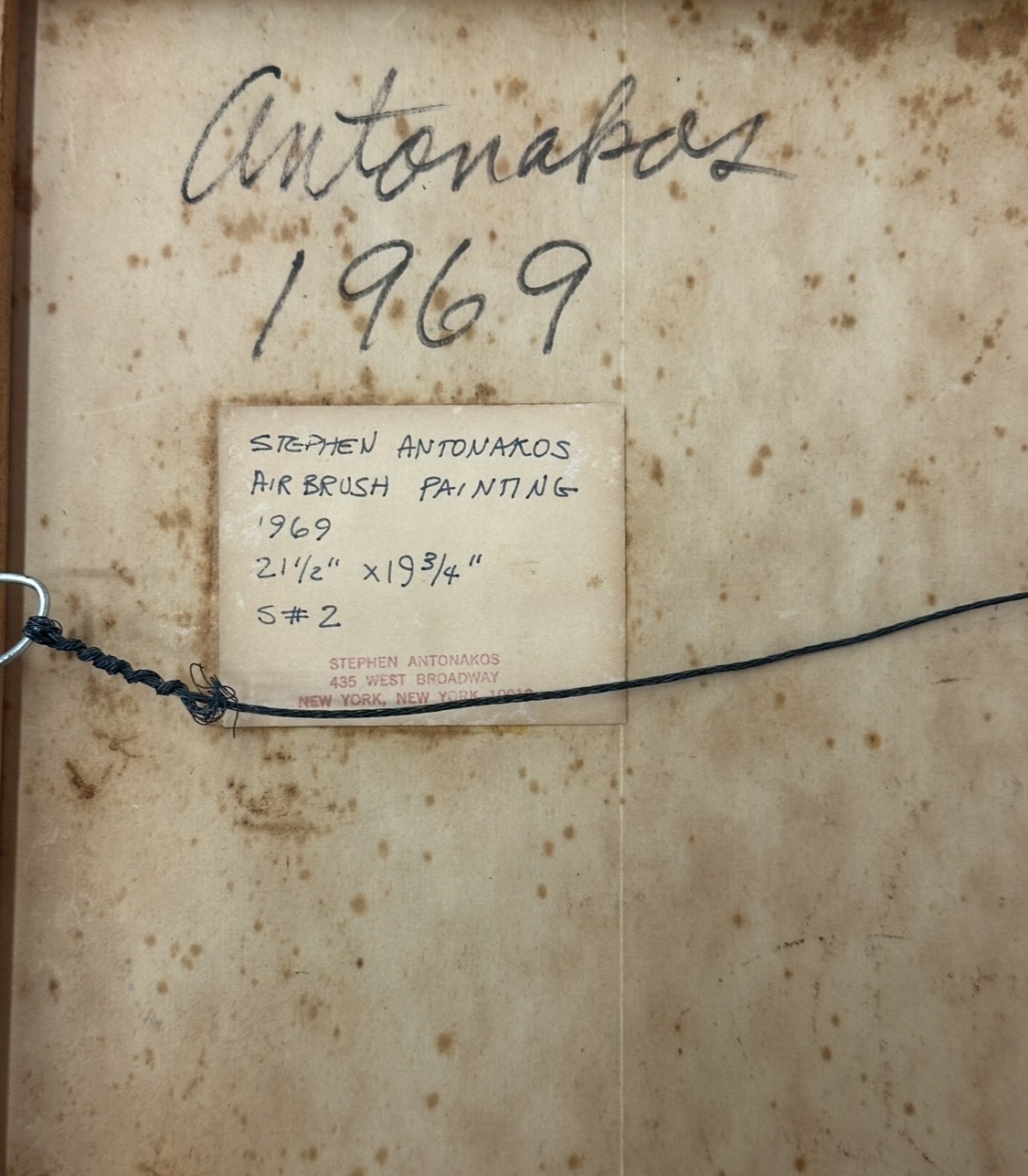
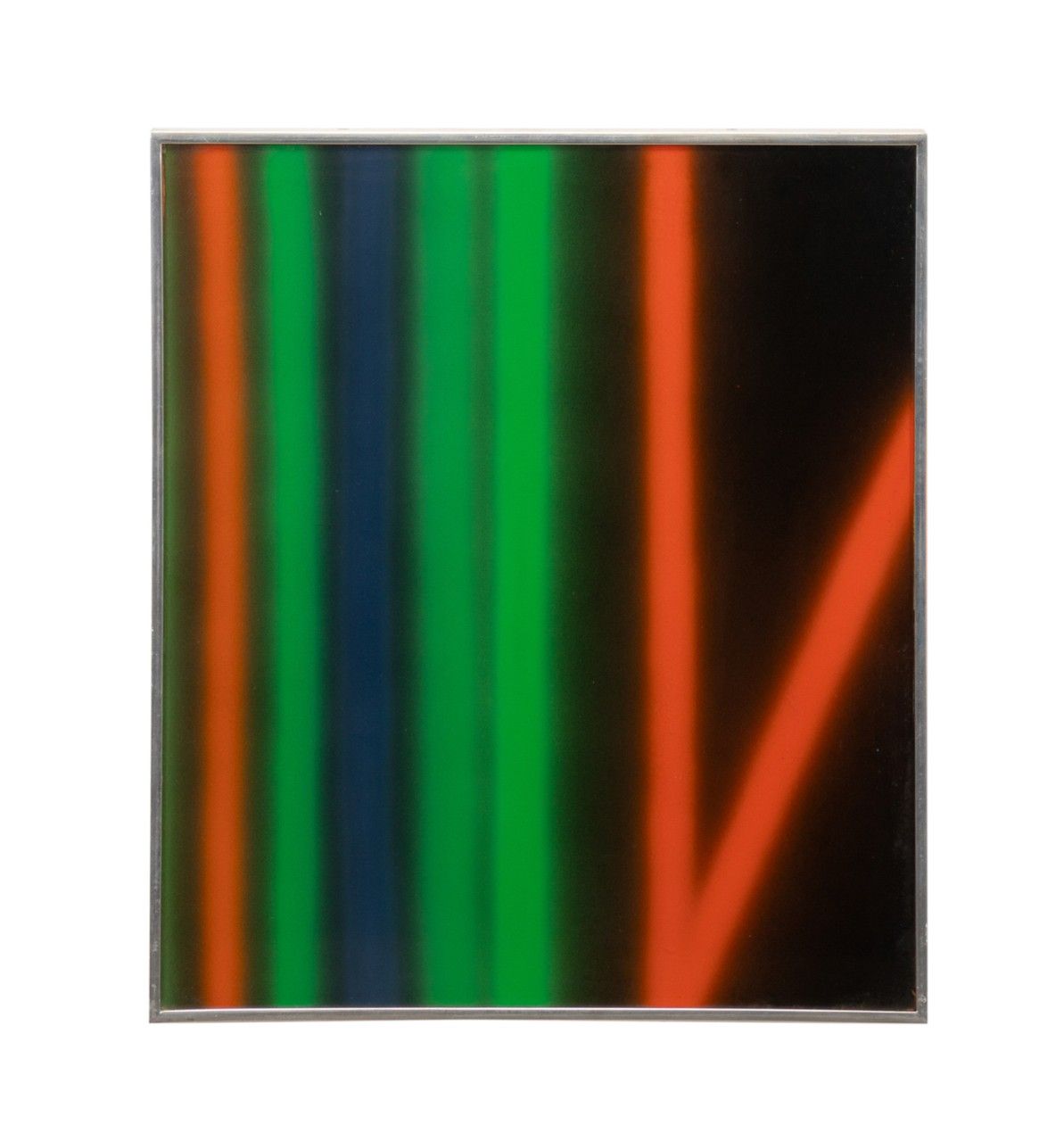
This 1969 work by Stephen Antonakos provides an even more revealing example.
The work is made with spray paint on paper mounted onto a wooden support. On the back of the wooden support is the handwritten inscription “Antonakos 1969”, together with an old label recording the artist’s name, medium, date, dimensions and New York address.
In this case, it is particularly important that the handwritten name and date are not on the painted paper itself, but on the wooden support to which the paper is attached. For this reason, the support cannot simply be treated as an element used to display the work.
The wooden support carries the handwritten inscription “Antonakos 1969”, the date and the old label containing information about the work. It therefore forms an important part of the work’s documented identity as it exists today.
If the work were removed from the wooden support and the original support discarded or replaced, the work would lose its physical connection to information that currently contributes directly to its identification and documentation.
This is why we do not intervene hastily in an older work before carefully examining exactly what we have in front of us.
A seemingly simple change of frame, the removal of a work from its support or the loss of an old label can erase information that may be difficult to recover later.
Before Removing Anything, Examine It
The practical rule is simple.
We do not discard old labels. We do not erase numbers. We do not remove notes. And we do not replace old stretchers or supports before establishing whether they form part of the work’s history and documentation.
First, we photograph and record the information that is present. We then research it, and only after that do we decide whether any intervention can be carried out safely.
In the art market, both the value of a work and the confidence with which we can assess it depend on more than what is visible from the front. They also depend on the history that can be documented alongside it.
Always Look at the Back
Examining an artwork does not end with what we see at first glance. The back, the base and the information preserved on the work can provide valuable evidence about its identity and history.
An old label, a number or a handwritten note may ultimately prove far more important than it first appears.
About Angelos Stavropoulos
Angelos Stavropoulos · Owner · STOA
Angelos Stavropoulos is the owner of STOA, continuing his family’s involvement in the art market, which dates back to 1976. His work encompasses modern and contemporary art, as well as historical, collectible and museum-interest objects, with a particular focus on research, documentation, appraisal and the trade of artworks and objects of art.