‘Zero for Conduct’ Surveys Art and Education in Greece
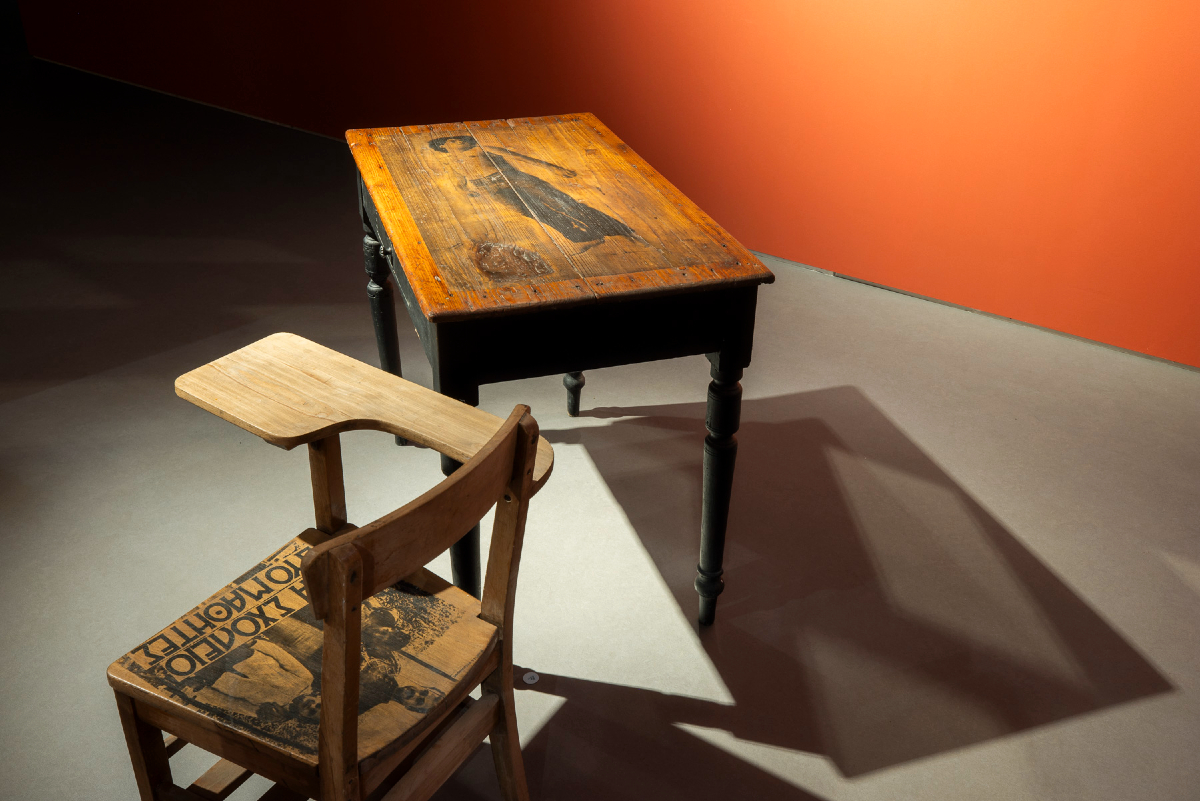
The American College of Greece Gallery presents “Zero for Conduct: Notes on Critical Pedagogies,” a research-based exhibition curated by Tina Pandi. The project functions as a critical inquiry into knowledge structures and alternative teaching methods, drawing its title and conceptual framework from Jean Vigo’s seminal 1933 film *Zéro de Conduite*, which interrogated scholastic authority. The show is rooted in the history of education in 20th-century Greece, a period marked by intense ideological conflict. It examines the sustained tension between authoritarian teaching models and reformist pedagogical practices, using art to probe how education has historically shaped power relations and identity.
The gallery at Deree – The American College of Greece is presenting an exhibition conceived as a research-based essay, under the provocative title “Zero for Conduct: Notes on Critical Pedagogies.” Curated by Tina Pandi, the project aims not merely to assemble artworks but to construct a field for critical reflection on knowledge structures and alternative pedagogies. The title, borrowed from Jean Vigo’s iconic 1933 film Zéro de Conduite, serves as a foundational reference: a challenge to disciplinary mechanisms and an inquiry into how education, rather than being a neutral transfer of information, acts as a dynamic system that shapes subjects, behaviours, and power relations.
At the exhibition's core lies the history of education in 20th-century Greece, a terrain of intense ideological conflict. The curatorial approach highlights the protracted tension between traditional, authoritarian forms of instruction and reformist, often radical, pedagogical practices. A particular emphasis is placed on the role of language, with the early 20th-century controversy surrounding the “language question” serving as a key example of how education becomes a site of political and identity negotiation.
Following this thread, “Zero for Conduct” examines how artists, from the 1960s and 1970s to the present day, developed initiatives that explored new forms of participation, collective learning, and embodied knowledge. The exhibition combines pre-existing works—some of which are of historical significance—with new commissions, creating a dialogue between different generations and approaches. Artists such as Leda Papaconstantinou, the duo of Thanassis Chondros and Alexandra Katsiani, Alexandros Psychoulis, and Dionisis Kavallieratos are placed in conversation with international figures like John Baldessari, activating art as a means of questioning the very terms of the educational process.
Overall, the artistic practices presented treat education as a creative, critical, and potentially liberating process. Other participants include Dimitris Antonitsis, Anastasia Douka, Karolina Krasouli, Natassa Biza, and Aspa Stasinopoulou. The inclusion of archival material from the Niki Kanagini Archive and the Archive of the Group for Communication and Education in Art offers a multi-layered reading of the relationship between art and pedagogy.
The exhibition is organised by the Frances Rich School of Fine and Performing Arts as part of the Arts Festival 2026. The project’s standing is reinforced by its collaboration with the Deree Art Collection and the support of major institutions, including the National Museum of Contemporary Art (EMST) and the Irini Panagopoulou Collection, from which works have been loaned. At the opening on May 28, 2026, a performance by Jennifer Nelson with students from the school will take place. “Zero for Conduct” is not simply a thematic show, but a substantive statement on the right to knowledge itself, at a time when that right is once again being challenged. The exhibition runs until June 18, 2026.
Source: CultureNow Τέχνες