Art Market Retreats to the Security of Modern Masters
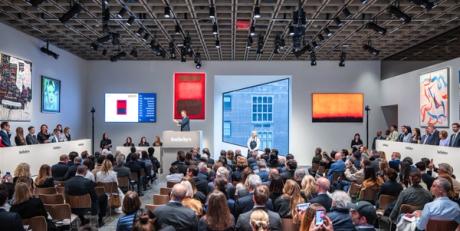
The latest New York auction season has confirmed a decisive shift in market sentiment. Capital is retreating to the perceived safety of established 20th-century masters, with works by artists like Jackson Pollock and Constantin Brâncuși achieving record-breaking prices. This flight to blue-chip names starkly contrasts with the cooling contemporary sector. Younger artists are largely absent from major sales, and the speculative frenzy of the early 2020s has vanished, placing galleries under significant financial pressure.
This season’s major New York auctions have confirmed a trend increasingly discussed in the art world: capital is flowing back to the proven, historical names of the 20th century, while the contemporary production of younger artists struggles to find a footing.
At Christie’s, a 1948 Jackson Pollock painting changed hands for $181 million, while a sculpture by Constantin Brâncuși fetched $108 million, both setting new records for the artists. At Sotheby’s, an abstract work by Mark Rothko from 1957 sold for $85.7 million. A report in The Art Newspaper noted that more than twenty works by giants of the last century—including Picasso, Warhol, De Kooning, and Basquiat—carried estimates of $30 million or more.
This surge in top-tier prices is fueled in part by the great wealth transfer, as collections built over decades are now entering the market, supplying the peak of the auction circuit with rare, museum-quality pieces.
At the same time, younger artists are conspicuously absent from the major evening sales. Among the top contemporary art sales, works by creators under the age of forty can be counted on one hand. The speculative energy that defined the market in the early 2020s, when collectors rapidly bought and resold works by fashionable names, has largely dissipated.
The most concerning sign, however, relates to the galleries themselves. Market confidence surveys reveal a significant divergence between the secondary market (resales at auction) and the primary one (new works offered by galleries). As collector Alain Servais told The Art Newspaper, the widening gap between gallery asking prices for new works and the prices for which similar pieces can be found at auction is eroding trust in the primary market.
This problem has a practical dimension: high operational costs—gallery rents, art fair participation fees, storage—are forcing dealers to set prices that the market is reluctant to support. It is no coincidence that a number of well-known international galleries have recently closed.
Despite these pressures, the contemporary market is not dead, merely more demanding. Where the public feels that prices are reasonable and the artist has built a consistent career, sales continue. Artists with established practices and critical recognition still find buyers, though the audience has become more selective, and smaller.
The facts and statements in this article are drawn from a report by Scott Reyburn in The Art Newspaper (1 June 2026).
Source: The Art Newspaper — Art Market